Give product selection a clearer basis
Present comparable information in a shared context so sales staff can explain differences and technical staff can assess suitability.

 Not Bad Req(uest)繁中Discuss a project
 Centralize product knowledge and comparison evidence for selection, technical discussions and cross-team queries.
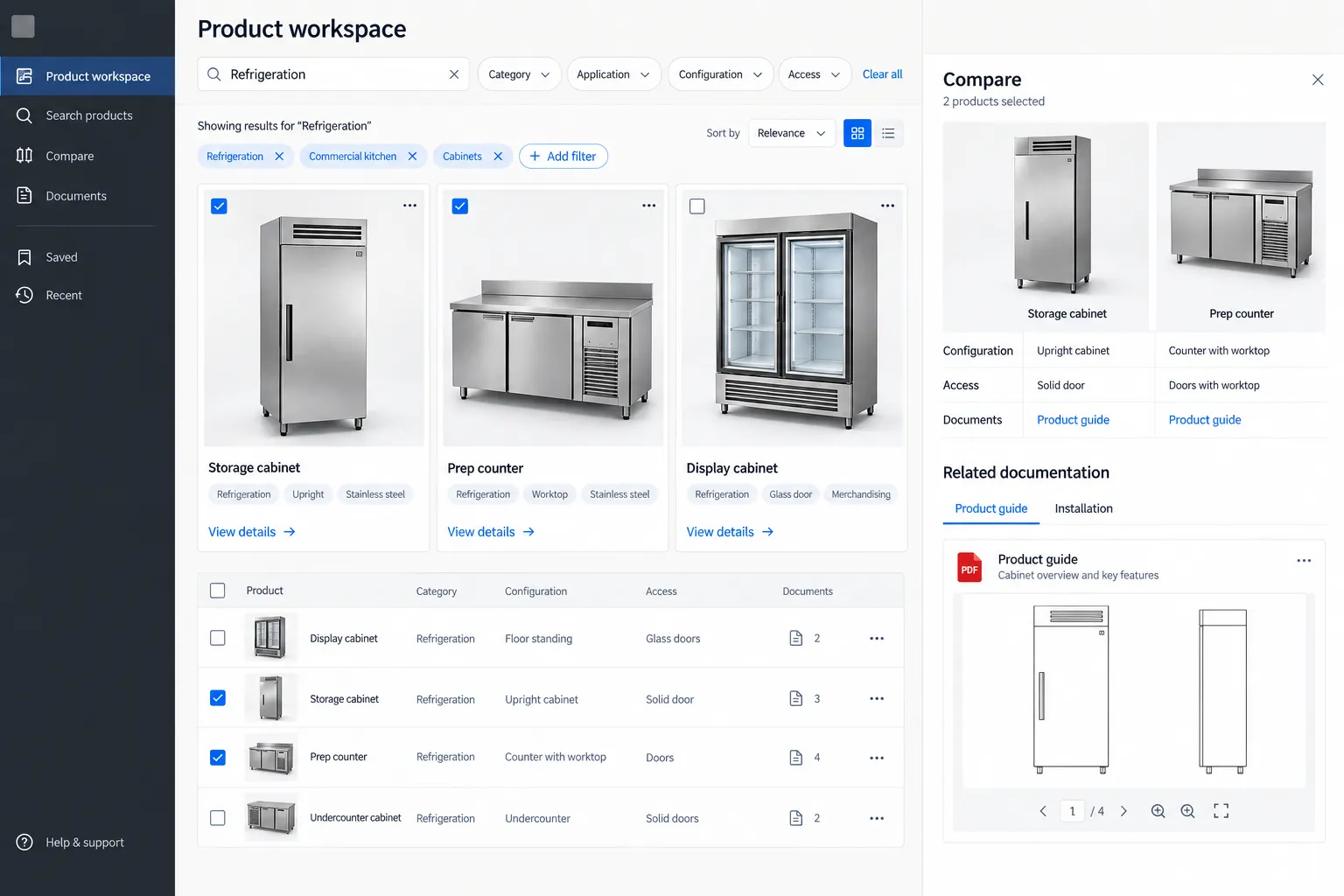
Anonymous product workspace for commercial refrigeration equipment, configuration comparison and related document preview
Product specifications live in enterprise systems and individual spreadsheets, while technical documents are scattered across shared folders. Sales selection, technical comparison and cross-department discussions involve repeated searches. Without consistent links between products, specifications and documents, finding information still leaves users uncertain about where it applies.
This enterprise system experience brought product data and shared documents together with search, multidimensional filtering, side-by-side specification comparison and document previews. Sales and technical staff could review product options and related information through one entry point.
Enterprise system delivery experience
Present comparable information in a shared context so sales staff can explain differences and technical staff can assess suitability.
Connect products with specifications and documents so colleagues can find information independently and new staff have a useful learning resource.
Turn maintained spreadsheets and documents into everyday reference resources, focusing investment on their connections and the user interface.
Planning considerations for a similar project; the actual scope follows your data, existing resources and operating requirements.
For similar needs, existing data and documents can be connected before adding a unified search and comparison interface. A separate management system should be assessed against update responsibilities and usage scale so build and maintenance effort fits product operations.
Start with one product family and common selection questions. Confirm data access, comparable fields and available documents, then have sales and technical staff complete real lookup tasks. This clarifies the preparation and integration effort before estimating expansion to other families.
Choose one product family and bring the existing data and common questions. Build a small catalog with search, filtering and side-by-side comparison to establish which tasks it can support.
Discuss this directionShare your business need, workflow or product idea. Start with an initial conversation to discuss a suitable scope and next step.
Request a free initial conversation Further analysis and development follow an agreed scope.