Make the inventory source clearer
Establish which source is authoritative for each item of data so warehouse, sales and management staff align on its use.

 Not Bad Req(uest)繁中Discuss a project
 Support inventory consistency across systems with comparable updates and traceable exceptions.
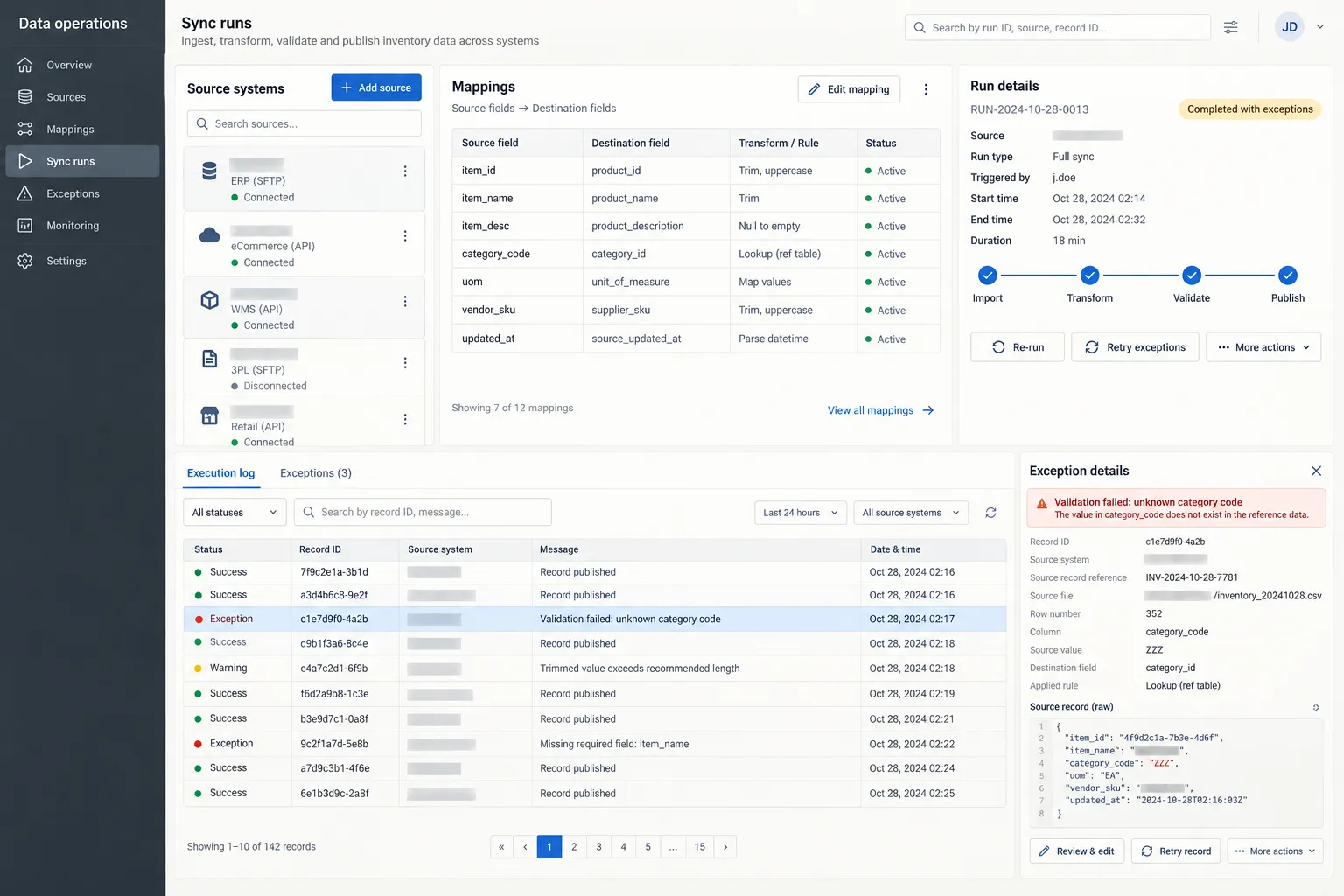
Data pipeline with source systems, field mapping, synchronization and error tracing
Warehouse, sales and administrative systems each hold inventory information. After a change, staff may be unsure which system is current. Clear data direction and exception handling between channels, warehouses and tools are needed to determine whether synchronization has completed.
This internal enterprise system experience includes inventory synchronization to address data updates between systems. Update direction, frequency and reconciliation need to be confirmed for the capabilities and workflows of each new system pair.
Internal enterprise system experience
Establish which source is authoritative for each item of data so warehouse, sales and management staff align on its use.
Plan update records and reconciliation so staff can distinguish processed changes from items awaiting confirmation.
Assess integration as a focused option for adding channels or tools while allowing useful systems to remain in service.
Planning considerations for a similar project; the actual scope follows your data, existing resources and operating requirements.
For similar needs, start by connecting one source and destination pair with clear data authority and reconciliation ownership. Real-time and scheduled updates have different operating and maintenance costs and should be chosen according to acceptable data delay.
Start with one system pair and a limited product range, testing normal changes, duplicate data and reconciliation after interruptions. Confirm that interfaces support the required updates and exceptions have a clear handling process before estimating further channels, higher frequency or a larger product scope.
Choose one source and destination system pair and a limited data scope. Confirm direction, frequency and exceptions, then validate synchronization with results that can be reconciled.
Discuss this directionShare your business need, workflow or product idea. Start with an initial conversation to discuss a suitable scope and next step.
Request a free initial conversation Further analysis and development follow an agreed scope.