Make recurring preparation repeatable
Carry agreed preparation practices into the next cycle so staff can focus on new situations and items requiring judgment.

 Not Bad Req(uest)繁中Discuss a project
 Make recurring reconciliation traceable so staff can focus on discrepancies and exceptions.
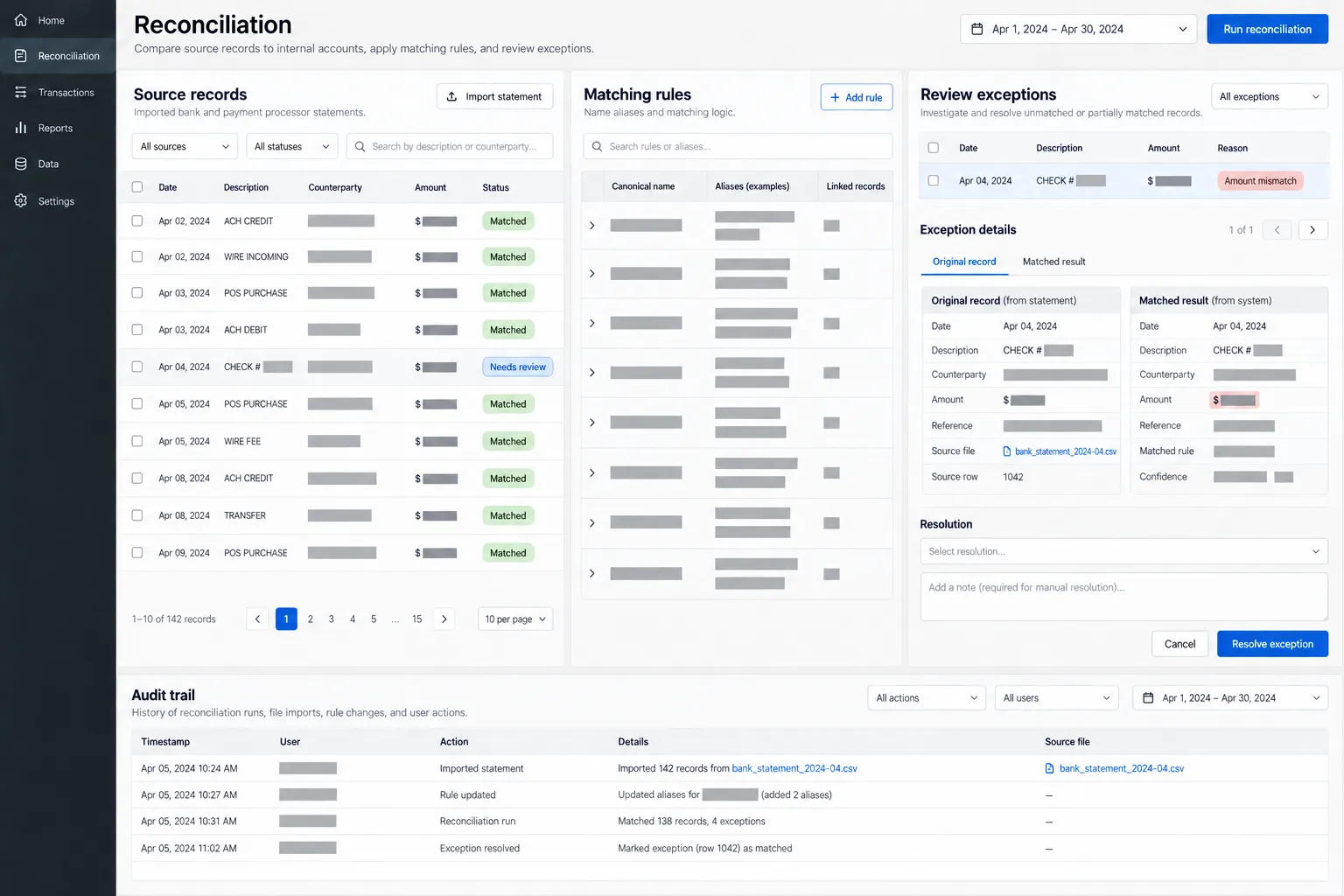
Accounting review workspace with source records, matching and exception checks
Daily or weekly accounting work often begins by collecting records from different sources, then resolving account-name variations, categories and settlement rules. For store receipts, supplier accounts or service fees, a discrepancy can mean searching through source records and previous manual decisions.
This consulting delivery experience connected recurring account preparation, name matching and categorized settlement into a reconciliation workflow. Settlement details and items awaiting confirmation allowed staff to trace sources and handle exceptions.
Consulting delivery experience
Carry agreed preparation practices into the next cycle so staff can focus on new situations and items requiring judgment.
Keep settlement results connected to their details, giving different roles and counterparties a shared basis for reconciliation.
Document name mappings, categories and review points so new staff understand what can be processed directly and what needs confirmation.
Planning considerations for a similar project; the actual scope follows your data, existing resources and operating requirements.
For similar needs, a focused preparation workflow can use existing documents or spreadsheets while retaining a manual review step. If it answers the main questions, a full accounting platform can wait while investment follows additional sources and collaboration needs.
Start with one document type and a complete settlement cycle, comparing mappings, totals and exceptions against the current manual result. Clarify the reasons for differences and review ownership before setting the automation scope, reducing the chance that unresolved practices lead to repeated development changes.
Choose one record type and one settlement cycle. Agree on the expected output and review rules, then validate a defined classification, settlement and reconciliation workflow.
Discuss this directionShare your business need, workflow or product idea. Start with an initial conversation to discuss a suitable scope and next step.
Request a free initial conversation Further analysis and development follow an agreed scope.